Test Match Innovations

It appears that the cricket authorities are finally waking up to the fact that Test Match Cricket is not in an entirely healthy state across the globe. The growth in the popularity of the short forms of the games has resulted in very low crowds for test cricket in some parts of the world. As someone who thinks that test cricket is the only important international form of the game, this is desperately bad news, but it has been building for quite some time. Personally, I am bemused by this. I am constantly told by commentators that the cricket fans in India are really knowledgeable, but all of the evidence suggests otherwise – they can only fill a stadium if the players are wearing pyjamas.

The only countries that clearly give a shit about test cricket are England, Australia and South Africa. It’s hard to be sure about Pakistan and the West Indies, but I am prepared to give the benefit of the doubt in both cases. Pakistan have been obliged to play outside their own country for so long that it is impossible to gauge the immediate popularity of test cricket at home. However, I find it hard to believe that a test match against almost any opposition in Lahore would fail to draw a full house. And, whilst the way that Pakistan play cricket does work in the short form, it works better in the longer form. Most all of the truly great Pakistan cricketers have been bowlers and test cricket is the only form where bowlers can be the stars.

West Indies is a harder case to argue. 20 years ago, WI fans were great value and test cricket was clearly what they cared about. More recently,when England tour, we buy a lot of tickets, especially at Barbados and completely skew the statistics. However, the pitches prepared for recent tours suggest that the authorities are more interested in 5 days of drunken tourist excess than a good cricket match. When other countries tour, the stadiums are empty.

Day Night Tests

in the last few years there has been  a big push for Day Night tests. The big blocker was the ball. Recent trials between Australia and New Zealand with a pink lacquered ball seem to have gone reasonably well. Fair enough. In parts of the world where dew is not an issue this seems like a reasonable idea. But, let’s  be clear on why the desire for day-night matches exists. It is because people are not prepared to give up a day of their annual leave in order to attend a day at the test match.

In some parts of the world this might work and I do not oppose the concept. In Britain, however, I think the idea is crap. We have dew issues throughout almost the whole of the year and this really would compromise the fairness of matches. Furthermore, in  Britain the suggestion is to resolve a problem that does not exist. Test matches are very well attended, thank you very much.

Joint Series

The latest bullshit idea to come from the ECB (you really would think Andrew Strauss would know better) is this idea of scoring across multiple formats to make up a series. What is worse, a test match is worth only twice the value of an ODI or T20 match. This means that in the current Sri Lanka tour of England, 12 points  are available for the 3 test matches, 10 points for the 5 ODIs and 2 points for the single T20. Bah! CricInfo even has a points table – what a nonsense.

A test series is a test series. You can combine the ODIs andT20s all you like – I don’t give a damn. But, combining test results with comedy cricket – that can’t be right. This was introduced for women’s cricket, where the semi-professional nature of the game means that only one test is possible. This is not the case in the men’s game. A test series should consist of at least 3 matches and it should stand on its own merits. The proliferation of 2 match series is not good news, but this summer at least, we do not have this problem.

If this is an attempt to make test cricket more “relevant”, then it is misguided. If, as seems more likely, it is an attempt to make people who care about test cricket care a bit more about pyjama cricket, then it is cretinous. Do not try to force me to care about the rubbish product by devaluing the real product. How dare you? Strauss – you should be ashamed.


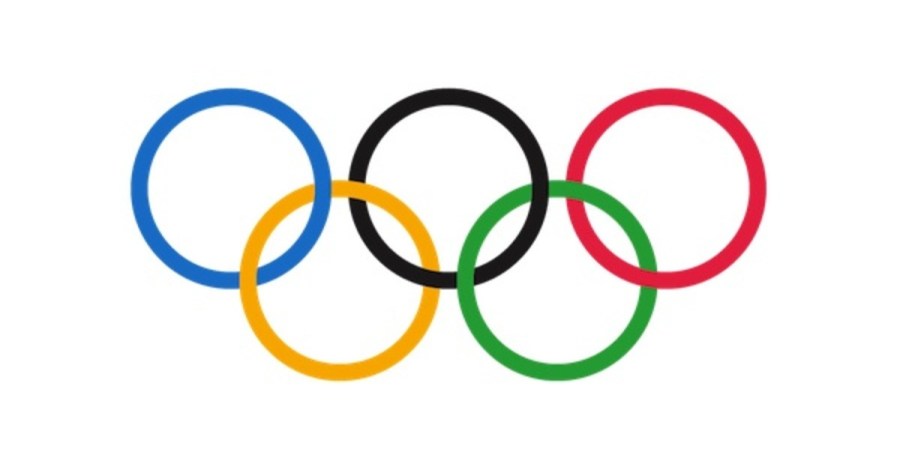
Olympic Sports

Many years ago, I had one of those post-pub, Men Behaving Badly style, drunken conversations with a couple of mates. Usually, such chats are forgotten as quickly as the kebab that preceded it, but in this case, it has stuck with me for years, and I think it is worth chronicling here as true wisdom. Dan & Pete – I think you were my correspondents in this case. If anyone ever pays me for this wisdom, I’ll ensure you get your share. I think you would be unwise to base your retirement plans on this promise, but who am I to dish out financial advice?

The conversation would have been as a direct result of our frustration at the amount of silly sports being celebrated at Barcelona in 1992, so that gives you an idea of how long these thoughts have been festering in my head.

What we eventually arrived at were a set of criteria that must/must not apply to a sport, before it could be included in the Olympics. My memory is far from perfect and I may well have coloured our decisions with my personal views. However, what follows would, I believe, serve the the IOC well. They are, of course, not interested in trimming the sports in their event, but they should be. Here are my guidelines…

 No activity that requires a judge, or panel of judges, to decide who won should be considered a sport and so should not be included in the Olympics.

This buys some easy points. Synchronised swimming is gone. No loss at all. Gymnastics, Diving and Ice Skating/Dancing also gone. Many people will mourn the loss of these events, but truly do you think it is acceptable for a panel of judges to say who won? It is one thing for a referee to ensure fair play, but subjectively deciding who has won brings us to the level of the Eurovision Song Contest.

Even more controversial will be boxing. You either change the rules to fight till knock-out, or you do not have a sport. Other martial arts and wrestling events will have similar issues.

Perhaps the most clear example of where judges are an evil force in sport is in the Ski Jump. Nothing could more clearly fulfil the Olympic motto of “Faster, Higher, Stronger”, except that in this case the dimension in question is further, as with the Long Jump or Triple Jump. But no! The morons in charge of this sport insist that distance is not the only factor. Points are also awarded for “style”. Imagine that in the 100m. Usain Bolt crosses the line first, but gets the bronze medal, because his closest competitors were deemed more elegant by a panel judges. Really? Ski Jumping must fix this or be banned.

No sport for which the Olympics is not the pinnacle of achievement should be included.

This seems to be increasingly relevant. For Athletics, Swimming and Track Cycling, the most important distinction is that of Olympic Champion, but we have had the problem of Football for many years. The “World Cup” is the global competition for football. Nobody gives a damn who wins the Olympics and most teams send junior representatives. Is that what the Olympics really wants? Drop it. The same can be said for Tennis and Golf, where the Grand Slams and Majors are what really matters. Even in cycling, no serious road cyclist would swap even a stage win at the Tour de France for an Olympic gold.

The IOC are forever trying to expand their event. Cricket T20, Rugby Sevens… forget it. Not interested.

No contrived sports should be considered.

What do I mean by contrived? Try these examples:

  • Walking. Why walk when you can run? Why not have a competition for backward walking or crawling on all fours?
  • Swimming other than freestyle. This is similar to the argument for Walking. Swimming, over various distances, is clearly a valid sport, but why have events for inefficient ways of swimming? Butterfly, backstroke, breaststroke and any other way of getting through the water (doggy paddle, anyone?) are all fine, but only if they are faster than front crawl. If someone is so good at breast stroke that they can compete in the freestyle races, then let them. Presumably that’s why it’s called “freestyle”, rather than front crawl. Otherwise, tough: stop swimming like a dick and learn to swim properly.
  • Triple Jump. This is just silly. It belongs in a Monty Python sketch, not the Olympics. The UK has had some success in this event, but that does not stop it from being daft. Why not have a quadruple jump?silly walk


Pigeon Holes

At some point during my lifetime, and it’s hard to pin down exactly when this was, it became necessary to define yourself in terms that should, by all reasonable standards, be utterly irrelevant.

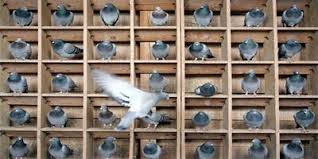
Every 10 years, we get treated to a census. This gathers lots of interesting information that I’m sure does serve a purpose, but it also insists that we pigeon-hole ourselves.  In 2001 a lot of people rebelled against having to define themselves in terms of religion, by stating that they were followers of the Jedi religion. 390,000 people made this statement in England and Wales alone, making Jedi the 4th most popular religion in the UK, ahead  of the Sikhs, the Buddhists and Judaism. This may seem, and essentially was, a harmless piece of fun, but it does point to a frustration with a society that insists on these meaningless categorisations.

I flatly refuse to categorise myself in this way. Wherever possible, if I am asked for my ethnicity, I will respond with human, though even that feels a bit restrictive at times. Mammal, or even carbon-based lifeform – to borrow Douglas Adams’ excellent phrase – might be more appropriate.

Badminton Application

I recently applied for a Birmingham City Council leisure centre pass to allow me to book badminton courts. I’d like to say I’m getting a bit fat and I need some exercise, but it’s got way past that stage. Anyway, I am aware that councils are the worst offenders of all in this political correctness categorisation. I don’t really know why this is the case. There will be lots of people who will try to justify it, but it will all boil down to bullshit. Anyway, I mention this particular case, because the online form for the Birmingham Leisure Centres was a masterpiece of its kind.

Bear in mind that what I wanted to get out of this was the ability to book badminton courts. Here, alongside the usual name and address stuff, is what I was asked:

Gender

Options were:

  • Male
  • Female
  • Transgender

Not sure why this is relevant to badminton bookings, but essentially harmless. Rather boringly, I selected male.

Ethnicity Group

Options were:

  • Asian / Asian British
  • Black / Black British
  • Chinese / Other
  • Mixed
  • White / White British

This seems both strangely limited and self contradictory. For instance, when I look at a map, I’m pretty sure that China is in Asia, so why are they not considered as Asians, and why is there no “Chinese British” category. This seems frankly racist. Given these broad categories, what would someone from, say, Peru select? What tone of skin colour would tip me from white to black? I’m Welsh – mostly celtic – with dark hair and brown eyes. My skin colour varies depending on the time of year from a sickly pinkish to a pale brown, going through a brief period of bright red if I’ve seen too much sun. Where does that fit in the selection on offer, and more importantly, why the hell does it matter? I’m sure the dick that came up with these five categories expects me to select “White British”, but my skin is not white and I refuse to play this game.

I selected “Chinese / Other”, on the basis that whilst I am not Chinese, Other might encompass something with which I might feel more comfortable. Like “Human”, for example.

Ethnic Group

Having obliged me to select and “Ethnicity Group”, I was then obliged to choose and “Ethnic Group”. At first sight, these two things may seem to be very similar, but clearly, at least to Birmingham CC, one is a subset of the other. At this point the 4 broad but contradictory categories are broken down further, as follows:

  • Asian / Asian British
    • Afghani
    • Bangladeshi / British Bangladeshi
    • British Asian
    • Indian / British Indian
    • Kashmiri
    • Pakistani / British Pakistani
    • Other Asian

Again, I am struck by the contradictions. How come Bangladeshis, Indians and Pakistanis can be British, but not Afghanis or Kashmiris? I love the fact that one of the subsets of “Asian British” is “British Asian”. Other Asian is still a pretty broad category.

  • Black / Black British
    • Black African
    • Black British
    • Black Caribbean
    • Somali
    • Zimbabwean
    • Other Black

And there was me thinking that Zimbabwe and Somalia were in Africa. How silly of me.

  • Chinese / Other
    • Arab
    • Chinese
    • Filipino
    • Iraqi
    • Irani
    • Israeli
    • Kosovan
    • Kurdish
    • Middle Eastern (excluding Israeli, Iranian and Arab)
    • Vietnamese
    • Yemeni
    • Other Group

You’re seeing the nonsense without my commentary, but nevertheless, I feel obliged to pick out some of the biggest absurdities. Why Vietnam, but not Thailand, Cambodia, Singapore or any of the myriad of Asian countries that should have been listed in the Asia section, anyway? Why exclude just those three countries from the Middle East, but not Yemen or Iraq which are also explicitly listed?  And, if you are going to use alphabetical order to avoid any hint of favouritism, at least get it right.

  • Mixed
    • Asian and White
    • Asian and Black
    • Black African and White
    • Black Caribbean and White
    • Black and Chinese
    • White and Other Mixed

How on Earth did they arrive at this list? Was there a committee meeting to decide which ethnic groups might breed with others? What a load of bollocks!

  • White / White British
    • British or Mixed British
    • Gypsy / Romany
    • Polish
    • Traveller
    • Other White European (Including mixed European)
    • Other White

I travel. Does that make me a Traveller?

So after all that, I still have no idea what our Peruvian friend would select. Of more immediate concern to me, what should I select? On the basis that I had already selected “Chinese / Other”, I went for “Other Group” and my sub-selection. I really hope that does not preclude me from playing badminton.

Faith

So, having spent ages pondering my ethnicity, I now have to worry about faith. I’m not big on faith. To me it means belief without evidence. Again, I’m not sure why it matters in relation to badminton. The choices I was offered were:

  • Buddhist
  • Christian
  • Hindu
  • Jewish
  • Muslim
  • Rastafarian
  • Sikh
  • Other Religion
  • No Religion

I am dismayed to see that Jedi is not listed, given that the census of 2001 found it to be the 4th most popular religion in the country. Why have a census if you then pick and choose which parts to take seriously? Predictably, I selected “No Religion”. On the basis that several of the listed religions reject science and that the motion of the shuttlecock is highly susceptible to mathematical modelling, I hope that applicants from those religions will be rejected. I doubt, however, if this will be the case.

Sexual Orientation

Next, it appears that knowledge of my sexual preferences is vital in consideration of my application. Honestly, I promise never to indulge in any sexual activity on the badminton courts of Birmingham. Ever. The options were:

  • Bisexual
  • Heterosexual
  • Lesbian or Gay
  • Other

I went with other, as the mind was left boggling about what this might be. Bestiality?

Disabilities

Finally, I was asked about a series of disabilities, including:

  • Deafness or severe hearing impairment
  • Blindness or severe visual impairment
  • Condition limiting Walking, Lifting, Carrying etc
  • Learning/Cognitive Impairment
  • Long standing illness (Impacting day to day act.)
  • Long standing illness (Not Impacting day to day act.)
  • Mental Health Condition
  • Physical impairment
  • Sensory impairment

Do I really need to tell them about a mental health problem, before I’m allowed to book a badminton court?

I know this all seems incredibly far-fetched. In case you are prone to doubt, the form in questions can be found here.

Hope for the Future

The above frustrates the hell out of me, and I think it really adds to the segregation and institutional racism that still dogs our society. I have no doubt that the people who have put it in place intend well, but it is clear from the way that the questions have been structured that they are not particularly intelligent. I completely fail to see the need for such prying questions for a simple service. Noticing ethnicity and faith in such matters is inherently racist. I’m sure the council will state that they need to record these facts to ensure that all ethnic groups and faiths are treated equally. this is a specious argument. Being unaware of these facts is the only way to guarantee equal treatment.

On the positive side, racism in this country has reduced massively during my lifetime. the attitudes of my grandparents were so different to those of my sons. The current generation are much closer to being colour blind and I am truly hopeful that process will be complete in a couple more generations if only the jerks who create questionnaires like the one detailed above could stop doing so.

Online Surveys

I regularly get asked to participate in surveys after buying a product or service on line. Quite often, I do complete the survey in the vague hope that it might help to improve the quality of the service in question. Trouble is, the quality of the surveys is often so poor that they actually do harm to the reputation of the product.

Today, I completed two surveys – one for NowTV, which was dull and unremarkable. The second was for DirectLine insurance. This survey quickly became annoying. So much so, that it inspired me to write this blog entry. I think it is worth chronicling some of the inane questions they felt it useful to ask.

directline_email_header_1

It started with some pretty routine questions about the clarity of the web site and ease of completing the process. Then they asked

How easy did you find it to purchase your policy? Where 0 means ‘very difficult’ and 10 means ‘very easy’?

I responded with 6 /10. There were no particular issues with making the payment, but like most people, I dislike paying for insurance, so I’m hardly going to revel in the opportunity of parting with my hard-earned for something I hope to never use.

The follow up question surprised me: Why was it so difficult?

I responded as follows:

6 out of 10 is not ‘so difficult’. Insurance is a hassle. I am never going to be overly enthusiastic about buying insurance. If you want enthusiasm try a different product, like good beer.

Next came: How likely or unlikely is it that you would recommend Direct Line to family and friends? Where 0 means ‘extremely unlikely’ and 10 means ‘extremely likely’.

Again, I responded with 6 /10. If someone asks me for a recommendation, I’d say that Direct Line seemed to be OK, but I’m not going to run around the streets like some demented zealot extolling their virtues. Once more, they clearly interpreted 6/10 as a negative response and asked

Why would you be unlikely to recommend Direct Line? 

I did not say that I would be unlikely to recommend them. I clearly stated that on the balance of probabilities, I would be more likely to recommend them than not. This is not difficult mathematics. What is wrong with these people? I responded along these lines with:

6/10 is not unlikely, so why ask me this question? I am losing respect for this survey. I am not certain to recommend Direct Line to anyone else, as I have better things to have conversations about than insurance, which is frankly a miserable necessity. However, if someone asks I’d say Direct Line was OK. At least I would have done until you revealed your inability to understand simple probability, which I would have thought was quite important to your actuaries.

I think what this reveals is that the marketeers than created this and many similar surveys are morons. What they actually wanted were binary answers – was it good or bad. They can only see the world in monochrome. And yet they provided a scale of 1 to 10, which suggests a spectrum of responses. I find it bizarre that big companies think it is sensible to allow their brand to be promoted by people with an IQ similar to that of pond scum. I am prepared to wager that the jerk that prepared this survey spent more time trimming his goatee than he did thinking about the questions he asked.

Perhaps I should stop completing on line surveys.


Ice Cold Drinks

I’m not proud of this, but I do occasionally visit fast food restaurants,  such as McDonald’s. Mostly, it is for drinks. Now, that may seem stupid, given that you can get a bottled version of the same drink for a lot less (or maybe you can’t – or at least not reliably. Pricing of cola appears to be one of the worlds more baffling algorithms and this could well be the subject of a future blog.)

hero_pdt_diet_cokeFor now, let’s get back to my attempted
purchase of cola from McDonald’s. There is a reason why I would prefer to buy my soft drinks from a vendor that has it on draught, rather than to simply pop into my local newsagent or supermarket and buy a can or a bottle. That reason  is simple – most fast food vendors serve their soft drinks with ice. I know some people don’t care about this. but they are wrong, and I am right. Look at the image. The ice is what makes this so appealing.

So, I recently stopped at a local McDonald’s and ordered a diet coke. I paid my £1.29 and drove to the next window. The young lady passed me the coke and I gave it a little shake to check there was ice in it. There was not, so I passed it back and asked her to put some ice in it.

I’m not sure of the numbers, but I bet the margin on a soft drink is absolutely fantastic. One website I found after several seconds of research reckons the cost is between 5c and 20c and suggests that the paper cup is the largest part of the cost. Sounds believable to me and I bet the ice is more expensive than the drink, too.

Without hesitating, she told me that they did not have any ice.  At that point, I decided that paying £1.29 for a draft carbonated drink without ice just did not stack up, so I asked for a refund. The girl looked a bit confused, but I pointed out that I had believed I was buying a drink with ice and as that was not the case, I would like to have my money back. She disappeared off into the back and I assumed she was seeking advice from a manager. But no, when she reappeared, it was with my drink again, now with a generous helping of ice. It was my turn to look confused. “So you did have ice all along?” I asked, though this was obviously somewhat rhetorical. With no trace of shame, she stated that she had meant she did not have any ice in the tray next to her. I was lost for words, so I just drove off, taking my ice cold drink with me.

Self Service Checkouts

Most people who know me would probably agree that I’m a bit of an antisocial bastard. This, no doubt, is one of the reasons that I like self service checkouts in supermarkets. At least, I like the idea. It should minimise the contact I need to have with real people. It’s similar to internet banking in that respect. No human contact – marvellous.

In practice however, the bloody things are really annoying. It starts off when I bring my own bag. I’m still rubbish at remembering to do that, but I’m getting better. It’s amazing the incentive that 5p can have. So the checkout asks me to put my bags on the scale and click “done”. At that point, it decides not to trust me and I have to wait for a human to check that all I’ve put on the scales is bags. Humph! Last time that happened, I picked up my bags and went to a conventional checkout. If I have to interact with humans, it might as well be efficient, rather than waiting for the girl being chatted up by the shelf-stacker to notice the large flashing red light above my checkout.

So, having got past the bag crisis, I begin to scan my groceries. At this point the checkout starts braying at me in a loud, strident voice to “Please put the item into the bagging area”. Either I’m really slow at this, or the timing is all wrong. Give me a chance before you start to nag me. Please.

Next comes the booze. All right, I accept that some form of age checking is needed when buying alcohol, but does it have to be so judgemental?  When the girl can next be dragged away from her compelling chat about the X-Factor, she wanders over and without even glancing at me, declares me to be “clearly over 25”. OK, I’m well past mark of mouth, but she could make a pretence of checking. Is it my clothes that have given me away? The grey hair? The middle-aged paunch?

Then there’s the troublesome item. Presumably it weighs just a bit less or a bit more that it is supposed to. The margin for tolerance on some items must be wafer thin. These machines are not in “benefit of the doubt” mode. Over comes the girl again, to confirm that an apple is indeed an apple.

Where’s the trust in all this? Perhaps the problem is that I’ve not identified myself at this point. I do that at time of payment by scanning the loyalty card. Why not do that at the start of the whole process and then build up a bit of a history with the customer – he shops here all the time and can be trusted. This after all, is part of what loyalty cards are for, though admittedly, they are mostly so the shop can record that I buy a lot of wine, so they can target me with offers for detergent.

Finally, it’s time to pay. But, I have a voucher that says 60p off if I buy some bacon. I’m always buying  bacon, so this makes sense. I scan the voucher. Now the girl must be summoned once again to confirm that the voucher is valid. If only computers could do this sort of thing.

Supermarkets are just starting to catch up with the rest of the retailers and offering contactless payments for smaller amounts. However, at least one chain has done this incredibly badly. The checkout asks me how I would like to pay. I click on “credit/debit card” and I’m instructed to insert my card into the card reader. Sadly, I know a bit about these things and I can clearly see that the device is capable of taking a contactless payment, so I waft my card at it. It detects my card, declines the payment, and informs me that if I’d wanted to make a contactless payment, I should have selected that option as my payment type. Really? How shit is that?

Finally, I’m about to leave, when it emerges that the ludicrously overpriced safety blades for my razor have a security tag attached. Another wait for the teenager, who then can’t work out how the instrument of torture used to remove security tags works. She calls a colleague and ten minutes later, I’m free to go, with my now slightly mangled box of razor blades.

One of the larger supermarkets in our area has taken this a step further, allowing you to take a scanner with you to scan your your shopping as you go. I first tried this years ago in a Safeway, before they all became Morrisons. I quite liked the approach, but it didn’t catch on. I’ve seen it in Watitrose, but I don’t shop there often enough to make it worthwhile registering. However, when I saw this scheme introduced into a local Tesco, I though “Yeah. Why not?” All went well until I came to pay. Once again, I am confronted with a self-service checkout, but this time I scan the scanner and my bill appears. So far so good. But, then I am selected for a “random security check”. Marvellous. This involves some woman, who looks like one of the dinner ladies at my old junior school, rummaging through my shopping and scanning a few items to check that I had, indeed, scanned these myself. What was weird was that she did not select the new £300 Dyson that was in the trolley, nor even the bottle of gin. No – the items I was deemed most likely to have sneaked into my trolley were a tube of toothpaste and some sun-dried tomatoes. Relieved that I have escaped the full cavity search, I am finally allowed to pay and leave.

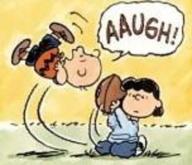
The bizarre thing about all this is that I charlie_brown_lucy_footballcontinue to use these self-service checkouts, convinced that this time, it’ll all go right.  I’m like Charlie Brown with that football.